
Former Reform Leader Admits Taking Russian Bribes
By Wali Khan -
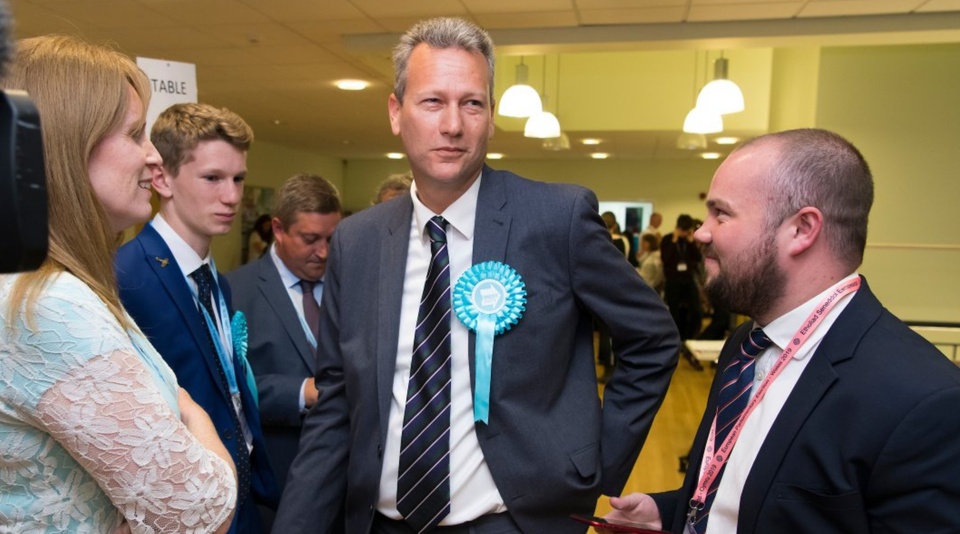
On 26 September 2025, Nathan Gill, a former Member of the European Parliament (MEP) and Reform UK’s leader for Wales, pleaded guilty to eight counts of bribery after admitting to accepting payments in exchange for making pro-Russia statements while serving as an MEP.
This story should have dominated national headlines and sparked a serious conversation about foreign interference in British politics. Yet, remarkably, it did not. Most of the country remains unaware that this even happened, and those who do seem to have already moved on.
Gill joined UKIP in 2013 and quickly rose through the ranks. He was selected as UKIP’s lead candidate for Wales in the 2014 European elections and, that May, was elected as MEP for the country. By December 2014, he had been appointed Leader of UKIP Wales, becoming one of Nigel Farage’s most trusted allies. In 2016, a power struggle erupted between Gill and Neil Hamilton. The party’s National Executive Committee backed Hamilton, but Farage once again came to Gill’s defence, further solidifying their alliance.
In 2019, Gill left UKIP to join Farage’s new venture, the Brexit Party, as a founding member. Once again, he was elected as an MEP and regularly appeared alongside Farage at campaign events and media briefings. When the Brexit Party rebranded as Reform UK in January 2021 - the same Reform that we know today - Gill was appointed Leader of Reform UK Wales in May. Rather ominously, he resigned from the role just two months later, citing “personal reasons.”
On 13 September 2021, Gill was stopped at Manchester Airport under counter-terrorism powers. His devices were seized, and an investigation into potential foreign interference began. Over the following years, Gill faded quietly from public view, though he remained loosely associated with Reform UK.
That brings us to the present, where Gill has now admitted to accepting payments in exchange for making favourable statements about Russia, particularly in relation to Ukraine. The payments came through Oleg Voloshyn, a former Ukrainian MP with close ties to the Kremlin.
Reform UK’s initial response was to claim ignorance. Party chairman Zia Yusuf said, “No one in Reform’s leadership knew him.” When photographs surfaced showing Farage grinning beside Gill, Yusuf brushed it off, suggesting that Farage takes pictures with thousands of people he doesn’t know. Eleven days later, Farage realised that denying his connection to Gill was unsustainable. He reversed course, admitting that he did know Gill but describing him as a “bad apple.” This U-turn completely exposed the Party chairman’s earlier dishonesty.
But to say Farage simply “knew” Gill is a gross understatement. Gill had followed Farage through every stage of his political career. He was one of Farage’s closest and most loyal allies. During a rally in 2019, Farage said:
Nathan has been with me since the start of this journey - a man who believes in Wales, in Britain, and in the right to govern ourselves.
Notably, this statement was made during the very period when Gill was actively accepting Russian bribes.
A British MEP admitting to taking bribes from Russia raises serious questions about the integrity of our democracy. How many of our representatives are truly serving British interests, and how many might be influenced by foreign powers? Is this an isolated case, or part of a broader pattern of interference that goes unnoticed? Is it just Russia, or are other countries also meddling in our democracy?
What makes the lack of outrage even more striking is how much media attention Reform UK usually enjoys.
A study by Cardiff University found that in the first half of 2025, Reform UK was featured in 49 bulletins on BBC’s News at Ten, compared to just 35 for the Liberal Democrats - a party with 68 more MPs. Similarly, a Loughborough University study found that in 2024, during the run-up to the General Election, Reform UK received around 16% of all political press coverage, making it the third most-featured party in print and broadcast media. Crucially, the same study found that Reform was the only major party to receive more “good news” than “bad news” coverage.
Given this level of exposure - and the media’s near-obsession with Farage - the muted response to Gill’s conviction is baffling. For a party that prides itself on putting “Britain first,” this scandal should have been disastrous. However, the story barely made headlines, and Reform faced little political blowback.
Now imagine the reverse: if a Labour leader had pleaded guilty to the same offences, and the party leadership had tried to cover up their connection, it would have dominated the front pages for weeks. But for Reform - a party that typically receives a disproportionate amount of airtime - this story faded almost immediately.

Member discussion