
It is 2025: Racism is now Trendy?
By Wali Khan -
Early in 2024 I wrote,
It is 2024, and racism is no longer trendy; unfortunately for racists, it is now socially condemned. Despite this, the impulse to hate remains, and the racists have evolved. They target a specific group of people, crafting a narrative of threat. However, the cover story is never about ’race‘. It is about ideology. The modus operandi remains the same: smear, demonise, ostracise, while violence simmers beneath the surface.
The United Kingdom has rampant levels of Islamophobia in the general population and, more alarmingly, in our government officials… (Suella) Braverman, (Lee) Anderson and other politicians must face repercussions for their actions, or the problem will only get worse. We cannot claim to be a tolerant, inclusive country while our politicians fuel the flames of hatred and division.
In 2025, the landscape is entirely different. We all know the phrase: “I can’t be racist, I have (insert minority group) friends.” For years, racism was denied even as it was practised, because people feared the consequences of being called out. But that fear is vanishing. Racists are no longer worried about the label. They have been emboldened - by influential figures, by social media algorithms, and by a mainstream media that legitimises their views.
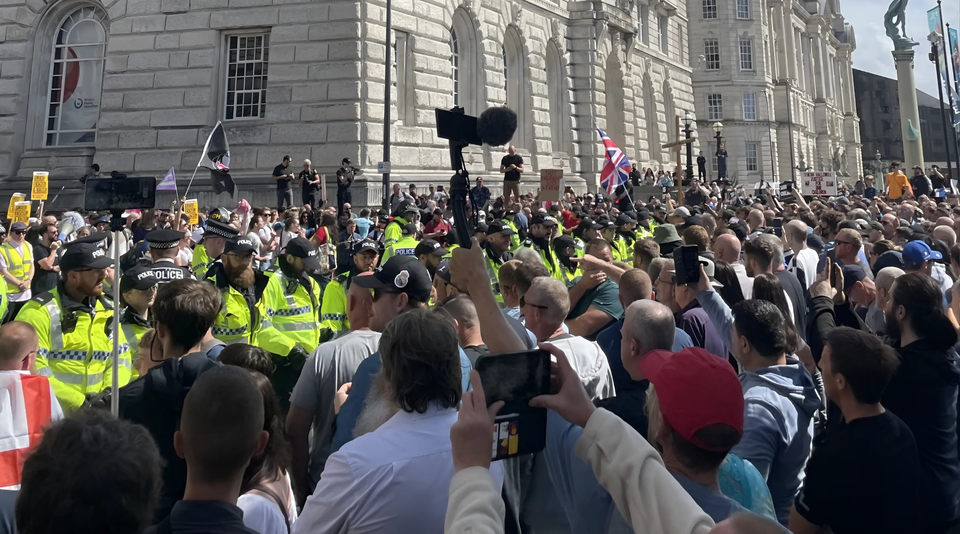
Just months after my original article, the Southport riots erupted. Three young girls were brutally murdered, and many others injured, by a depraved individual. While the city grieved, provocateurs seized the tragedy to stoke division. They spread false claims that the killer was a Muslim immigrant. In reality, he was a Welsh-born minor, which the police made clear early on to dispel conspiracy theories. When his name - Axel Rudakubana - was revealed, Tommy Robinson mocked it with the tweet: “Proper Welsh Cardiff name that.” The implication was clear: only white-passing names, like Tommy Robinson or perhaps, Stephen Yaxley-Lennon count as “British”. Although this sentiment typically lurks in the shadows, it erupts when emotions run high. Think back to the Euros: which players were flooded with racial abuse after England lost? It certainly wasn’t Harry Kane.
This pattern has intensified on an unprecedented scale this year. What was once whispered on the fringes is now amplified to millions by billionaires, celebrities and even world leaders. On X, a video recently went viral showing three white men painting St George’s crosses on buildings while racially abusing a Muslim woman who was walking with her young son. She ignored them, but they repeatedly called her a “raghead.” Despite the harassment and vandalism, they were celebrated online as “patriotic heroes.” Defenders of the woman were bombarded with abuse. People with darker skin, born and raised in Britain, were told they’d soon be deported while white allies were branded “traitors.”
It’s important to note this hate is not only directed towards radical Muslims as the Islamophobes would like you to believe. Just before my 2024 article, Lee Anderson, Conservative MP at the time claimed Islamists control Sadiq Khan - the Muslim Mayor of London. Islamists are fundamentalists who aim to establish a political system based on an extreme form of Sharia Law. Khan on the other hand is a liberal, progressive who constantly receives death threats from Islamists for his liberal, progressive views and policies. Anderson's language, and the support he received from fellow MPs shows a deliberate refusal to distinguish between the majority of Muslims and radical Islamists.
This didn’t come out of nowhere. For decades, anti-Muslim prejudice has been excused as “legitimate criticism of ideology.” Politicians and media figures such as Farage, Robinson, and Douglas Murray were given platforms, lending them credibility and normalising this bigotry. The result is today’s Britain: a place where minorities are racially abused in public with little reaction. Where a woman who calls for migrant hotels to be burned down is painted as a political prisoner. Where a man who mocked and slandered a Syrian refugee boy is celebrated as a “national hero.”
We must stop indulging in these word games. The claim that “Islam isn’t a race, so it can’t be racism” has been a dangerous distraction. It doesn’t explain why Frank Roque murdered a Sikh man in “revenge” for 9/11. It doesn’t explain why Islamophobic hate crimes surge after any crime committed by someone with darker skin, regardless of their religion as exemplified by Southport. It doesn’t explain why, when activists highlighted Islamophobia, Sky News’ Kay Burley dismissed the point by citing Rishi Sunak - a Hindu man - as prime minister.
Burley’s remarks, which I analysed in 2024 remain telling today:
In a recent interview, Sky News presenter Kay Burley suggested that Prime Minister Rishi Sunak's ethnicity, rather than his government's policies or actions, somehow disprove accusations of Islamophobia within the government. Rishi Sunak is, in fact, not a Muslim, so on the surface level, Burley's comments seem entirely nonsensical. However, in reality, they expose their true sentiments: if you are a brown man, you are considered Muslim. Again, this highlights the ridiculous nature of any arguments attempting to suggest Islamophobia has nothing to do with race. Whether intentional or not, her remarks underscore a dangerous issue: the tendency to downplay or ignore Islamophobia in society, branding it as a legitimate criticism of ideology. All while brushing the deep-rooted racism under the rug.
In barely a year, the shift has been dramatic. We now see entire swathes of the public calling for deportations not just of asylum seekers, but of legal immigrants and even British citizens from minority backgrounds. What was once whispered in the margins is now shouted openly, amplified by politicians, the media, and millions online. Islamophobia was the testing ground for hate - a socially acceptable cover that allowed racism to flourish in plain sight. But history tells us prejudice never stays neatly contained. The same narratives that have been used against Muslims are beginning to be turned on other minorities, and eventually on anyone who refuses to conform to a narrow vision of “Britishness.” If this trajectory continues, it will not only be Muslims who suffer - it will be the fabric of a diverse, democratic Britain itself that is torn apart.
Member discussion