
Just Stop Oil: Nuisance or Necessity
By Honey Barlow Marshall -
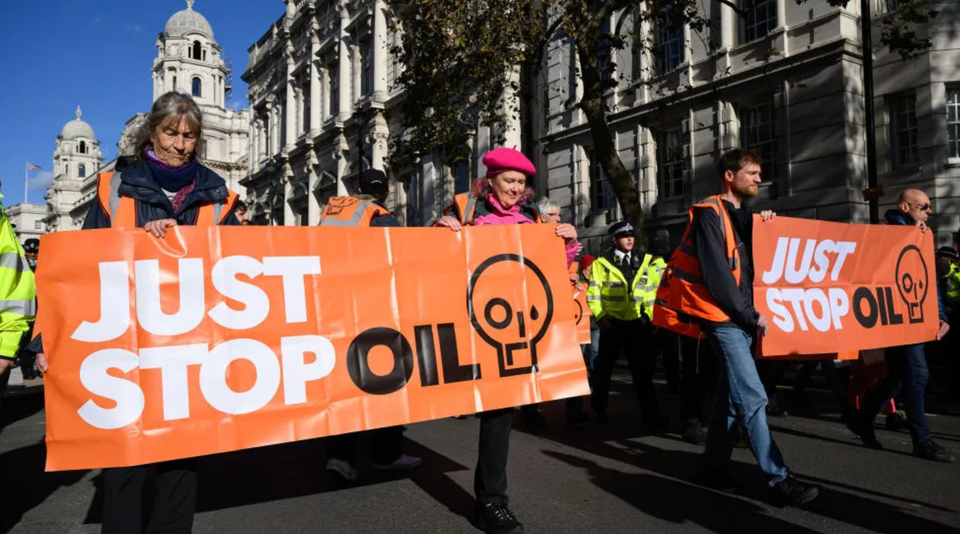
Over the past few years I have seen countless viral videos of people stuck in traffic due to Just Stop Oil protests, and I’ll admit, I’d also be pretty frustrated in that situation. I am left thinking, however, are they really the villains here? Or are they doing exactly what our democracy needs right now?
The loud, messy, and deeply inconvenient nature of these protests may be exactly the kind of morally justified civil disobedience that this country needs.
Politicians continuously shake hands at climate summits, pose for pictures, and churn out empty pledges, all while ignoring the fact that we know that they know. They know the facts, they know the science, and they know the urgency at which we must act to turn climate change around. And yet, global temperatures rise, fossil fuels stay funded, and climate pledges remain a PR stunt during election season.
Hoffman and Graham argue that a state’s legitimacy isn’t automatic – it is earned. If a government is failing to protect its citizens from harm, such as the climate crisis, it loses its moral authority. Thus, citizens are not merely justified in protest but morally obligated to do so.
Just Stop Oil protestors aren’t being rebellious for the sake of it, but actually stepping into the void of responsibility. It is protest as a form of democratic repair.
I hate being delayed as much as the next person, but is ethical responsibility aboutwhat is convenient? No, it is about what is moral. Enter utilitarianism, the concept that the best action is the one that generates the most overall good. Consequently, blocking roads, interrupting events, and even throwing soup are minor setbacks compared to the bigger picture of the looming reality of a climate breakdown. If protests force our governments to change course, then these inconveniences are ethically moral.
Critics will continue to argue that protests do more harm than good, as they frustrate the public and alienate potential allies. A utilitarian would not worry whether protests are popular but only whether they reduce future harm. If even a minor change occurs, the utilitarian morality justifies the momentary outrage.
The severity of the climate crisis we are facing means we can’t afford to wait for permission.
Productive protest has historically been fought through breaking the rules. Look at Martin Luther King Jr., who was thrown in prison, the suffragettes, who smashed windows and were arrested, and Henry Thoreau, who refused to pay tax. They are united by a shared belief that civil disobedience is sometimes the only way to bring about real change.
But, as Hoffman and Graham hammer home, civil disobedience isn’t a threat to democracy but the very essence of democracy. A system grounded in the values of accountability, justice, and responsibility.
So yes, I feel uncomfortable sat in my car late for work and appointments, but that’s the point. Making way for revolutionary change isn’t cosy.
Albeit, this disruption comes at the cost of the ordinary person, yes. But really, what doesn’t? The everyday citizen is stuck in a cycle of always being the one picking up the tab – environmentally, economically, and socially.
However, do their stunts make people less likely to support climate action?
Rawls outlines the grounds at which civil disobedience can be morally permissible. They must act with appeal to shared principles of justice. Therefore, when protestors block ambulances or disrupt the working-class, they do risk losing the moral high ground.
Outrage gets attention. There’s no question about it. Media coverage spikes when protest disrupts, and with that, so does public debate. The element of shock and inconvenience is all part of their plan; they want us to complain about it and moan. Since the impending doom of climate change won’t pressure the government, the instant inconvenience of these protests will.
If Just Stop Oil can refine their tactics and avoid causing harm to the most vulnerable, their message could land more powerfully. Activists must think strategically. How do you disturb the system while appealing to society’s shared sense of fairness?
You don’t have to like Just Stop Oil to admit they have a valid point. Climate change is a real threat and the government is dragging their feet to commit to actual change. There are no doubts that history has shown us that the most effective voices are the most inconvenient ones.
Hoffman and Graham argue that protest holds a mirror up to the state, and what it reveals is disturbing: a government that prioritises short-term economic confidence over long-term ecological survival. In the end, we must ask ourselves, are we upset at the mess protestors make or are we upset at the mess they are trying to stop?
This sort of protest is not a breakdown in democracy, but it is democracy doing exactly what it is supposed to do when our state fails us. It forces us to be uncomfortable and face uncomfortable truths.
One day, we will all thank them and wish we had stood with them.
Member discussion